
South American Cichlids
Share
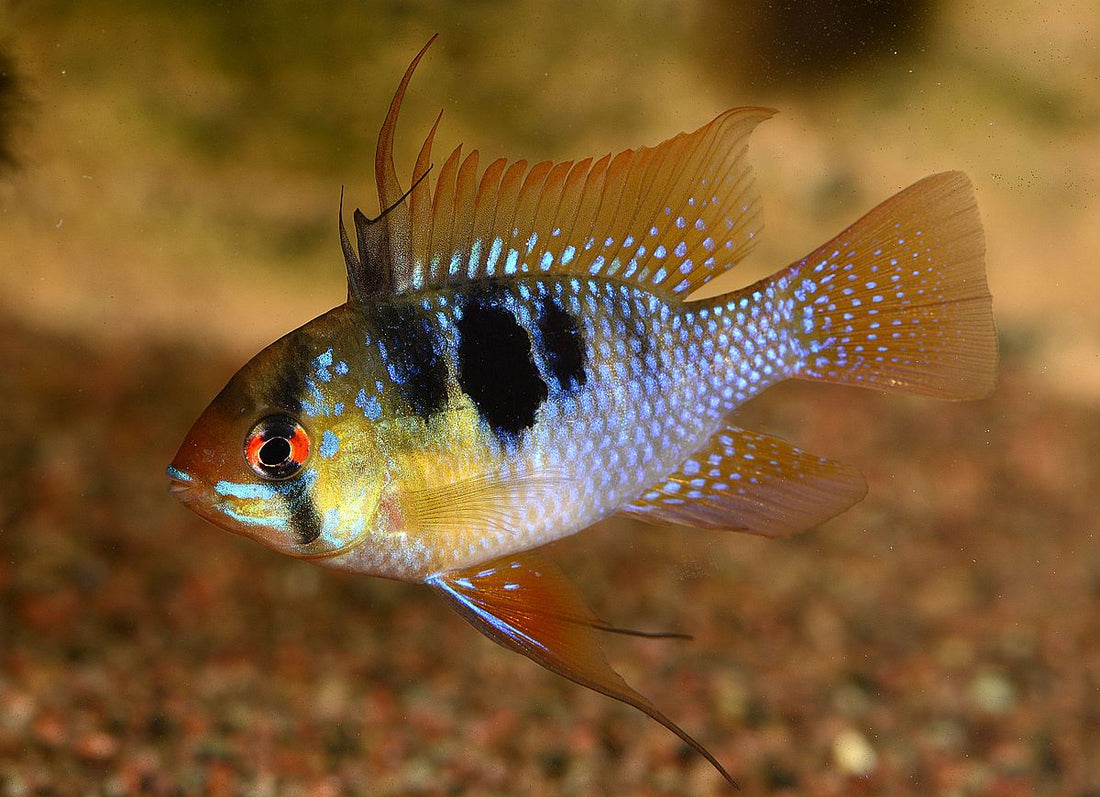
South American cichlids are a diverse and fascinating family of fish, including popular species such as the Ramirezi, which captivate aquarists worldwide. Native to the tropical freshwaters of South America, these fish are distinguished by their colorful beauty, intriguing behavior, and adaptability to a variety of aquarium parameters.
Regarding their ideal environment, South American cichlids prefer moderate tropical temperatures, generally between 24 and 28 degrees Celsius. They thrive in well-planted aquariums with an abundance of hiding places, rocks, and roots, mimicking the rivers and streams of their natural habitat. A fine sand or gravel substrate is recommended to provide a natural environment.
In terms of water parameters, South American cichlids prefer a slightly acidic to neutral pH, generally between 6.5 and 7.5. They can also tolerate a range of water hardness, although moderately soft to moderately hard levels are generally preferred. Ensuring stable and clean water quality is essential for their health and well-being.
In terms of behavior, South American cichlids exhibit great diversity. Some can be territorial and aggressive, while others are more peaceful and social. The Ramirezi, for example, is known for its relatively peaceful nature, but it can also become territorial during breeding. It is therefore important to choose compatible tank mates and provide enough space and hiding places to avoid conflicts.
These fish are opportunistic omnivores, feeding on a variety of foods such as flakes, pellets, frozen or live foods, as well as fresh vegetables. It is recommended to provide them with a varied and balanced diet to meet their nutritional needs.
In conclusion, South American cichlids, including species like the Ramirezi, are captivating and versatile fish that add a touch of exoticism and dynamism to any aquarium. By providing them with an environment suited to their needs and ensuring proper nutrition, owners can enjoy their beauty and fascinating behavior for many years.
Regarding their ideal environment, South American cichlids prefer moderate tropical temperatures, generally between 24 and 28 degrees Celsius. They thrive in well-planted aquariums with an abundance of hiding places, rocks, and roots, mimicking the rivers and streams of their natural habitat. A fine sand or gravel substrate is recommended to provide a natural environment.
In terms of water parameters, South American cichlids prefer a slightly acidic to neutral pH, generally between 6.5 and 7.5. They can also tolerate a range of water hardness, although moderately soft to moderately hard levels are generally preferred. Ensuring stable and clean water quality is essential for their health and well-being.
In terms of behavior, South American cichlids exhibit great diversity. Some can be territorial and aggressive, while others are more peaceful and social. The Ramirezi, for example, is known for its relatively peaceful nature, but it can also become territorial during breeding. It is therefore important to choose compatible tank mates and provide enough space and hiding places to avoid conflicts.
These fish are opportunistic omnivores, feeding on a variety of foods such as flakes, pellets, frozen or live foods, as well as fresh vegetables. It is recommended to provide them with a varied and balanced diet to meet their nutritional needs.
In conclusion, South American cichlids, including species like the Ramirezi, are captivating and versatile fish that add a touch of exoticism and dynamism to any aquarium. By providing them with an environment suited to their needs and ensuring proper nutrition, owners can enjoy their beauty and fascinating behavior for many years.