


NageoireBleue
Tetra Rosé Pepper mint HY511
Tetra Rosé Pepper mint HY511
Couldn't load pickup availability
◎ Origin: South America (Guyana / Amazon basin)
│ Size: 4–5 cm
⌬ Temperature: 24–28 °C
∷ pH: 5.5–7.5
⋄ Diet: Flakes, micro-pellets, frozen, live food
⌁ Lifespan: Approximately 3–5 years
≣ Lifestyle: Schooling (minimum 6-8 individuals)
⊕ Compatibility: Very peaceful. Suitable for calm community aquariums with other tetras, rasboras, corydoras, peaceful apistogrammas, and dwarf gouramis. Avoid aggressive, fast, or territorial fish. Appreciates planted tanks, soft to slightly acidic water, and moderate light.
Megalamphodus rosaceus Tetra – A pink jewel of the aquatic world
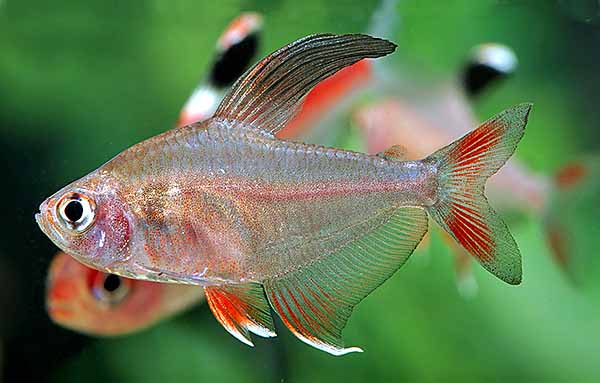
The Megalamphodus rosaceus, more commonly known as the Rosy Tetra, is a small freshwater fish native to South America, mainly the Amazon basin in Guyana and Suriname. This characid is particularly popular in aquariums for its delicate rosy color and peaceful behavior.
Appearance and characteristics
The Rosy Tetra measures between 4 and 5 cm on average when adult. Its slender body is slightly transparent with a beautiful pink hue that varies depending on light, stress, and water quality. Its fins, often tinged with red or black, add a touch of elegant contrast. Males generally display brighter colors than females, especially during mating season.
Behavior
Very social, this tetra is a schooling fish that prefers to live in groups of 6 individuals or more. It exhibits calm and harmonious behavior, making it an excellent choice for community aquariums. It cohabits well with other small peaceful fish such as Corydoras, Rasboras, or other similarly sized tetras.
Slightly acidic and soft water promotes more intense colors.
Diet
Omnivorous, it accepts a wide variety of food: flakes, granules, live or frozen prey (daphnia and bloodworms). A varied diet helps maintain its health and intensify its colors.
Breeding
Breeding is possible in an aquarium, though slightly delicate. A specific tank with slightly acidic and soft water, subdued light, and fine vegetation promotes spawning. Eggs are laid in a scattered manner, and adults must be removed after spawning to prevent them from devouring the eggs.
Share

